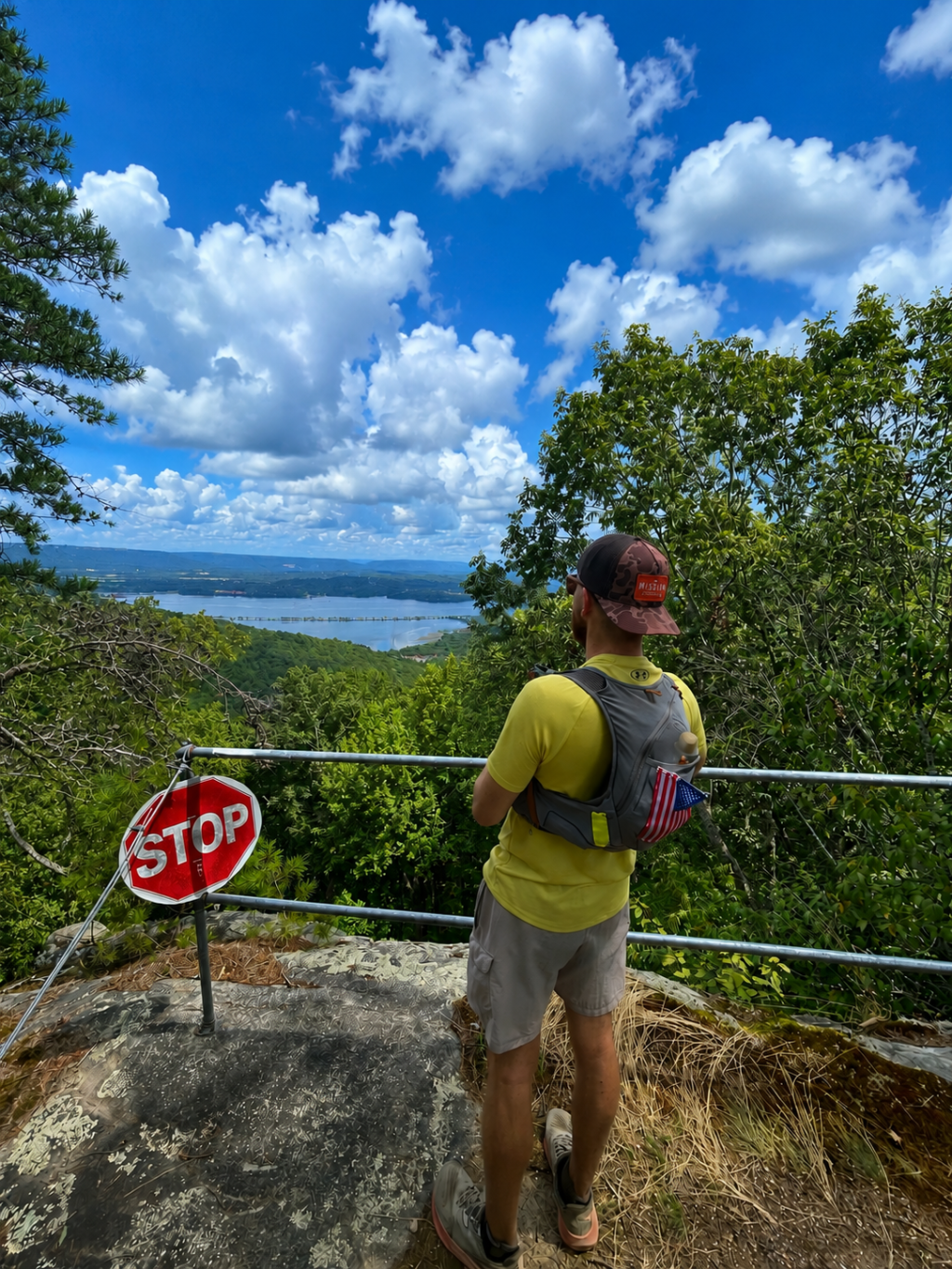
Every ultrarunner knows that before a race you become ruthless about ounces. Runners who think nothing of running 100 miles suddenly become obsessed with a few ounces. Every item in the pack gets scrutinized. Luxuries are removed and necessities are removed. Do I need two pair of socks? I can get by with one. An extra battery? Too heavy. We become meticulous, questioning each item remaining in the vest: Can it be purchased or obtained on the course? Does it serve multiple purposes? Every item has to earn its place because every ounce comes with a cost measured in time, energy and fatigue.
An ultrarunner’s obsession over a few ounces is remarkable because we sometimes ignore the invisible burdens of the race that weigh far more. Blisters weigh more than a vest. Sleep deprivation weighs more than a vest. Chaffing weighs more than a vest. Dehydration weighs more than a vest. The fear of failure weighs more than a vest. Comparing oneself with other runners weighs more than a vest. Wrestling with the purpose of racing weighs more than a vest. Even the front runners’ quest to defend a reputation of success is heavier than the vest.
As I began researching vests, I realized there was great debate. Everyone has an opinion and everyone seems to believe they have the best answer. The purists were against vests, claiming that your hands and shorts pockets are all you need. Many swore by the 12L vest. There were arguments for every capacity in between. There are even a few outliers carrying enormously weighted vests with enough supplies to survive a month in the wilderness. And then there are preferences for pocket placement, compartment size, colors, zippers, snaps, pulls and clasps. And the occasional runner with a sewing machine, who cannot find the perfect vest they are searching for. They will purchase a $200 vest and make alterations until it is a one-of-a-kind jewel. I decided on the Osprey Duro 6L vest. A happy median because, after all, I tend to be a middle of the pack runner.
In anticipation of wearing the vest in a race, it became part of every training run. At first, I was placing a 10lb plate in the back compartment for every run. As the heat index rose, I was filling a water reservoir with as much ice as it would hold. Eventually, as I obtained all the items I could possibly need for the race, the plate was replaced with gear. I really felt the weight at first, especially the morning after a run, as every joint would crunch or crack when my feet hit the floor. The tendons in my legs screamed at me as I limped down the stairs.
For the 2026 Last Annual Vol State Road Race, I began the race with a total vest weight of 4.9lb. This was much less than in the 2025 race. In that first experience, nearly half my gear ended up in a trashcan halfway through the race. What was in my pack? I had some of the same items most runners carry, such as a 550mL soft flask and a candy bar. Most of my items fit into one of four small, Ziplock bags. There was a foot care bag with all the items that work for my feet. A hygiene bag with items to keep me fresh, safe from the sun, and able to see with good vision. An electronics bag with chargers and a headlamp. The most important bag was a sleep bag. Sleep deprivation issues affected me greatly in 2025. I was either too cold or uncomfortable to sleep anywhere outside of a hotel. This year I was falling asleep every time I wanted. I had a dry, sleeveless shirt and fleece-lined arm sleeves to put on before laying down. You’d think after running in 100+ degree heat the coolness of the night would feel good. When you try to stop and sleep in it, sweat dries, body temperature decreases, and you begin to shiver! Not this year. To give both body and mind the signal that it was time to sleep, I had a super lightweight, silk sleeping bag liner to get into. And to top it all off, a sleep mask and earplugs so that I was sleeping in complete darkness and silence.
I also had one completely ridiculous luxury item that I refused to leave behind: a personalized stamp so I could leave my mark on the guestbooks that are often put out at the Angel stations for us to sign, leave a thank you note, or to mark where we come from. The angels are the backbone of this race, and I feel they deserve more than a signature. On the first night, it was neat to stamp the book at the Gleason Fire Department. One of the angels remembered me from the previous year’s race. Moments later, she brought the book over, flipped backwards to the stamp from last year, and smiled when she realized I had a new stamp this year. Some luxuries don’t help you run faster. They simply remind you why you’re running in the first place.

Somewhere during all the training and race miles, the vest begins to remind us that the Bible talks about weight too. One of the richest spiritual parallels between running with a vest and the burdens of life is the call in Hebrews 12:1 to lay aside every weight, and the sin which clings so closely. In addition to carrying less, I’ve found another valuable principle: weight must be carried wisely. Over the past two years, pain has taught me that not every weight is to be carried in the vest. Some items are better carried on your waist or in a shorts pocket. The weight doesn’t change; only where I carry it. Life is that way often. If all your identity is in your career, a job loss will crush you. If all your joy is in your children, every struggle they face will be overwhelming. If all your hope is in your health, one diagnosis will destroy you. Maybe God never intended for one area of life to bear all the weight? This year, I began distributing weight. As a result, some of the pains I felt from last year vanished.
Following all this obsession, adjustment, and adaptation, the vest almost becomes part of you. It disappears. Not physically, but you stop noticing it. You wear it and keep moving forward. I got to a point where I couldn’t remember what it felt like to run without extra weight. I feel like that is a good description of my life also. I’ve carried certain burdens for so long that I don’t even notice them anymore. And when someone points it out, I’m almost annoyed that they made me remember the weight.
The meticulous obsession with vest weight is even more remarkable when we consider that most are walking through everyday life carrying ten or twenty pounds of emotional weight without realizing it.
We carry burdens for so long that, eventually, we hardly know they are there.
After a hundred or two hundred miles into an ultrarace: real-world burdens can begin to surface. This is another invisible burden of ultrarunning: What grief, stress, or worry are you carrying with you into the race? Can you keep it from affecting your race? I believe it is actually one of the most special moments of a race when these invisible burdens surface while running with another person for many miles or hours. It is an opportunity to break through the superficial walls we construct, to share, and connect. These are Galatians 6:2 moments, where we can genuinely bear one another’s burdens.
Now that the race is over, recovery is taking place, and I am easing back into daily running, I have realized some amazing observations. The vest has been emptied, washed, and put away to hang in a closet when I go out for runs. And I feel amazingly light. My gait has improved, my cadence picked up, and hills seem easier. It almost feels like cheating! I think there’s a powerful lesson in this. That’s grief, betrayal, disappointment, parenting, caregiving, divorce, anxiety. We rarely stop carrying them. We become accustomed to them and sometimes do not notice they are there. They are slowing us down without us realizing it.
Just as we become ruthless about every ounce in our vest, we need to learn to ask the same questions about the burdens we carry in our hearts. If you were packing for tomorrow’s race, you’d ask whether every item has earned its place in your vest. When was the last time you asked the same question about what you are carrying in your heart? It is possible that some burdens will never leave. And there are some that God does not remove immediately. But, it is possible that, occasionally, if we ask, He can heal something you’ve been carrying for years. That is when we realize how heavy it was, and how free we feel after He removes it.
Cast your burden on the Lord, and he will sustain you. – Psalm 55:22


Leave a comment